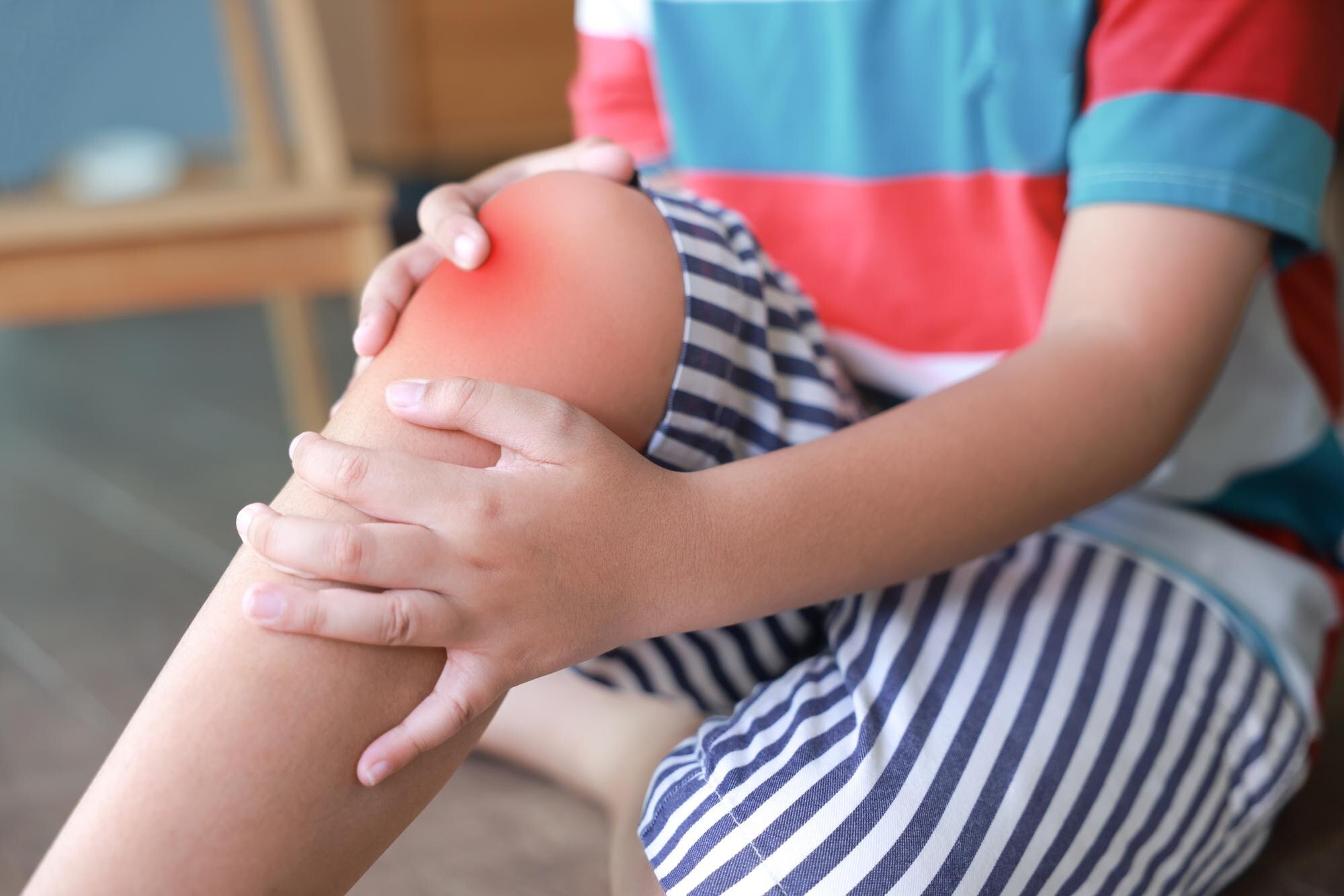
A child’s bow legs, flat feet, limp or knee pain may be part of normal growth, but persistent symptoms, restricted movement and changes in walking need closer attention. You will learn which conditions commonly require assessment, which warning signs need urgent care, and what information and tests help identify the cause.
Key takeaways
- Bow legs often straighten by age 2; knock knees usually improve by age 7.
- Flexible flat feet and common intoeing often improve as children grow.
- Seek urgent care for severe pain, deformity, fever, swelling, or inability to walk.
- Expect questions, a physical examination, gait assessment, and imaging when needed.
Which childhood leg and foot changes are normal, and which need assessment?
Bow legs usually curve outward in infants and toddlers, then straighten by about age 2. Knock knees commonly appear around ages 3–4 and become less marked by roughly age 7. Flexible flat feet are common, and the arch often develops with growth. Intoeing from femoral anteversion or internal tibial torsion usually improves as children grow.
| Finding | Usual pattern | Needs assessment when |
|---|---|---|
| Bow legs | Both legs follow a similar curve and improve by age 2 | The bowing persists beyond about age 2, worsens, causes pain, or affects one leg |
| Knock knees | Both knees angle inward during early childhood and improve by about age 7 | Marked knock knees remain after roughly age 7, or changes are one-sided or painful |
| Flat feet | The arch appears when the child stands on tiptoe; walking remains comfortable | The foot is rigid, painful, asymmetric, neurologically abnormal, or limits activity |
| Intoeing | Feet point inward but running and walking function normally, with gradual improvement | It does not improve with growth, causes repeated falls, pain, tripping, or other functional difficulty |
Growing pains are usually intermittent, affect both legs, and occur in muscles rather than joints. They do not cause limping, swelling, warmth or morning stiffness. Special shoes, braces and exercise programmes do not reliably correct typical intoeing; persistent functional deformity needs paediatric orthopaedic assessment.
Which hip, foot and joint conditions commonly affect children?
Six conditions deserve different responses: some need early surveillance, while others require urgent assessment.
| Condition | Clues parents may notice | Usual next step |
|---|---|---|
| Developmental dysplasia of the hip | DDH can exist after a normal newborn examination. Breech presentation or family history may prompt ultrasound. Pelvic X-rays become more useful around 4–6 months. | Arrange hip imaging when advised. Hip-safe swaddling keeps the hips bent and apart, not tightly straight and together. |
| Clubfoot | The foot turns inward and downward and does not correct easily by positioning. | Ponseti casting uses repeated gentle manipulation and serial casts. An Achilles tenotomy may follow, then prolonged foot-abduction bracing; missed brace use increases recurrence risk. |
| Perthes disease | This multi-year disorder of the developing hip may cause a limp, stiffness or hip, thigh or knee pain. | Treatment centres on preserving hip motion and keeping the femoral head contained in its socket. Age at onset and remaining growth influence the plan. |
| SCFE/slipped capital femoral epiphysis | Hip, groin, thigh or knee pain with a limp and reduced internal rotation can signal SCFE, even without obvious hip pain. | Seek urgent orthopaedic assessment. Keep the child completely non-weight-bearing while awaiting care. |
| Juvenile idiopathic arthritis | One or more joints stay swollen or stiff, with reduced movement. | Arrange medical assessment for inflammation and treatment before stiffness or joint damage progresses. |
| Osteochondritis dissecans | Activity-related pain, catching or swelling affects a joint, commonly the knee or ankle. | Stop aggravating activity and arrange assessment, which may include imaging to evaluate the joint surface. |
How do scoliosis, limb-length differences and growth-related injuries affect treatment?
Age, puberty, growth remaining and skeletal maturity change how scoliosis is managed. The Cobb angle, measured on a standing spine X-ray, guides decisions: many curves below about 20–25 degrees are observed, while selected growing children with curves around 25–40/45 degrees may use a brace.
Surgery is mainly considered for larger, progressive curves around 45–50 degrees or more, especially near skeletal maturity.
Treatment choices for limb-length differences and injuries depend on:
- A small limb-length difference may need only observation or a shoe lift. A predicted adult discrepancy, its cause and its effect on walking determine whether a growing child needs growth modulation, later shortening, lengthening or reconstruction.
- Growth-plate fractures and fractures extending into a joint surface need closer follow-up than uncomplicated fractures. Younger bones can remodel, particularly for mild angulation near a physis, but remodelling does not reliably correct rotational deformity, major displacement or joint-surface irregularity. Older children have less growth remaining to correct an error.
- Osgood-Schlatter disease causes traction pain at the tibial tubercle while the knee is growing, often after running or jumping. Reduce aggravating activity, stretch the thigh muscles and use symptom control; surgery is rarely needed. A lasting bump after pain settles does not prove active disease.
A child’s plan can change as growth slows, so repeat examinations and X-rays matter. A painless curve or discrepancy is not automatically harmless, and a painful, worsening or function-limiting problem deserves paediatric orthopaedic assessment.
Which symptoms need urgent or emergency orthopaedic care?
Persistent or worsening pain needs prompt paediatric orthopaedic review, not watchful waiting. Warning signs include night pain, swelling, warmth, fever, limping, refusal to walk, loss of motion, visible deformity, unequal limb length, recurrent falls and symptoms after an injury.
| Urgency | Warning signs | What to do |
|---|---|---|
| Prompt review | Persistent pain, night pain, swelling, warmth, fever, limp, loss of motion, unequal limb length or recurrent falls | Arrange paediatric orthopaedic assessment |
| Immediate emergency care | Open fracture, visibly deformed limb, numbness, severe uncontrolled pain, cold or blue hand or foot, or inability to bear weight after trauma | Go to an emergency department now |
Fever, severe pain, refusal to walk and a restricted hip or other joint can indicate septic arthritis. Blood tests and imaging support the investigation, but joint aspiration and culture identify the organism; treatment may require urgent antibiotics and surgical drainage.
A displaced supracondylar fracture around the elbow requires special urgency. Clinicians need to document the pulse, hand perfusion and nerve function before and after splinting or reduction. A pale, cold or increasingly painful hand, or worsening numbness or weakness, signals a limb-threatening emergency.
Do not let a child with suspected slipped capital femoral epiphysis walk while awaiting assessment, even if the pain is felt only in the knee. After any significant injury, treat inability to bear weight, increasing swelling or a new deformity as an emergency rather than waiting for a routine appointment.
What happens during a child’s orthopaedic evaluation?
A paediatric orthopaedic assessment starts with your history and a comparison of how both sides move. Before the appointment, write down:
1. When symptoms began, the exact location, timing, activity triggers, fever or recent illness, injury mechanism, walking changes and family history. Record a short video of any abnormal gait, especially when your child is barefoot, running or climbing stairs.
2. Expect a gait examination, followed by inspection of the spine, hips, feet and limbs. The clinician performs range-of-motion testing, leg-length measurement, strength testing, neurological checks and circulation checks. Bring shorts and your child’s usual shoes; do not coach them to “walk normally”.
3. Testing depends on the findings. Observation may suit a painless, flexible variation. Ultrasound is useful for young infant hips; an X-ray shows alignment, bone and growth plates. MRI evaluates cartilage, marrow and soft tissue, including early Perthes or osteochondral disease. CT is reserved for selected complex bone or joint questions because it uses radiation.
Blood tests help investigate inflammation or infection.
At Dr DineshRam Orthopedician ECR, families in and around ECR can use this decision point for assessment, diagnosis, treatment planning, rehabilitation or surgical referral when symptoms need specialist review.
Related service
Children’s bones, joints, and muscles are different from adults and require specialized care. View service → |
Frequently asked questions
Which childhood leg and foot changes are normal?
Bow legs in infants and toddlers, knock knees around ages 3–4, flexible flat feet, and common intoeing often improve with growth. Persistent, worsening, painful, asymmetric, or function-limiting changes need assessment.
Which hip, foot and joint conditions commonly affect children?
Common conditions include hip disorders, clubfoot, flat feet, intoeing, juvenile arthritis, and other problems affecting alignment, movement, or joint development. An orthopaedic examination helps identify the cause.
How can scoliosis, limb-length differences and growth-related injuries affect treatment?
Treatment depends on the child’s age, growth remaining, severity, symptoms, and effect on function. Assessment may include measurements, gait review, monitoring, physiotherapy, bracing, or surgery when indicated.
Which symptoms need urgent or emergency orthopaedic care?
Seek urgent care for severe pain after an injury, visible deformity, inability to stand or walk, a suddenly swollen joint, fever with joint pain, or a limb that is cold, pale, numb, or weak.
What happens during a child’s orthopaedic evaluation?
The clinician reviews the child’s development, symptoms, injuries, and family history, then checks posture, alignment, joint movement, strength, gait, and limb lengths. X-rays or other imaging are ordered when the examination requires them.